School got out last Thursday! Woohoo! The kids and I have been looking forward to this for a while, especially Dasha. The last day of school marked her 13th birthday. We now officially have two teenagers in the house. My, my! Dasha picked the birthday menu and we celebrated with taco night and monkey bread for her "cake". It was a nice change from the typical birthday cake. Her "big" gift was her third iPod shuffle. Yes, I said "big" because we couldn't trust her with a more expensive choice considering she washed her previous two in the washing machine. We told her she is more than welcome to have a nano... if she buys it. I can't believe my two little Ukrainian girls are now teenagers!
The other "bang" was some very good news about Mike. We found out that he is on the Lt. Col. promotion list! Yeah, Whoop and Praise God!!! It will take a while for him to pin on, but at least he's on the list. We are guessing by next summer. Keep looking for updates. We'll definitely post it along with pics. I am so proud of my hubby! I am grateful to God for giving him the favor to get this far in his military career. We give Him all the credit for where we are today.
Our plans for the summer entail a few fun trips. We have some friends coming in next week for two weeks. They are leaving their little ones behind. So we have action packed their itenerary and are taking them to several countries. One trip is a date trip because we are leaving our kiddos behind too. A friend has generously offered to watch the kids for two nights and three days. Once we get back from our little escapade, we are letting Stasia go with some people from church to a youth conference in Switzerland. I am nervous about letting her go, especially to another country. But I know that she is more than capable and trustworthy. Mike had to remind me that in four years it will be college and I won't be getting her back except for holidays. I hit him!
Our last big trip is going back with Mike to the states as he attends a three and a half week training in Florida. I have all kinds of plans in my head and I am hoping to somehow fit them all in the little time we have there because, with the price of airline tickets, we may not make it back for a while. Let's just say Chik-fil-A is at the top of my list, several times!
Again, our home is open for visitors if anyone ever wants to come visit!
In Him,
Melissa
Tuesday, June 19, 2012

Tuesday, June 5, 2012
Spring Break to School's Out
A few things have happened since our last post. The first is spending our Spring Break as a family in Turkey. What an adventure! Mike was able to get clearances, signatures, and times worked out for our family to fly space available to Incirlik. Can't beat free airlines! We stayed on base for great lodging rates. And then splurged with the traveling and purchases. Altogether it was amazing!





Our first trip was to Cappadocia. The cave houses were interesting to see.

And the trip included a night in a cave hotel. The kids liked that.

Something new to experience was riding a camel. It is very different from a horse - much more bouncy and the fall is greater which increased my fear! It was worth it to try.

The second trip we took was to see the seven churches of the Apocolypse (the seven churches mentioned in Revelations). It was cool to see where Paul and some of the Apostles had been.


This is Pamukkale. It is a hot mineral spa near the ruined Roman city of Heiropolis.


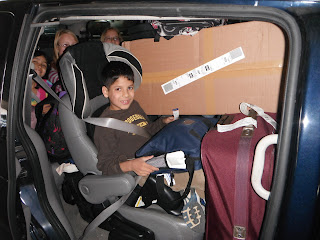
We had so much stuff coming back that we thought we were going to have to take two trips to get home. I masterminded a way to get it all in for one trip. We had to sacrifice alot of leg and comfort room, but we made it.

It was and amazing trip! I am so thankful that Mike took the time and patience to arrange everything so we could see Turkey. The kids and I will never forget our adventures there.
Once we got home from that trip, we vowed to wait a while before going on another one. School gets out next week and we are not planning anything until July. We have a few local things planned. But our big summer trip will hopefully be accompanying Mike back to the states for his TDY in Florida. We are praying about HOW to get out there. We'll see.
Lastly, we finally said goodbye to our home in Del Rio. We were blessed with it for 7 years and finally passed it on to another family. We will still be back to visit. But thankfully, I do not have a heavy burden on our shoulders to worry about that home. I am grateful to be a single homeowner again. God is good in all of His provisions for us!
The summer chapters will come next...
In Him,
Melissa
Saturday, March 31, 2012
Another Birthday
Last week brought my 36th birthday or as I fondly called it "another 29th birthday". We celebrated by playing some games with a few friends. And Mike let me order our first iPad. Of course, being overseas, I couldn't walk in and buy it anywhere. So I had to order it. It will take a few weeks to get here. But then I can play with it and start learning some cool tricks. Woohoo!
The military also gave me a belated birthday present. We found out on Thursday that we are staying here at Ramstein for our next assignment. Another HUGE blessing from God! Mike will transfer jobs at the end of June, but we won't have to move physically. We get to stay here. In addition, we found out that because we are staying overseas, we get a free trip back to the states (compliments of the military) and Mike gets thirty days leave without using his annual leave. How awesome is that??? We plan to use it next summer. So if you wanted to visit us and haven't made it over yet, you have another chance. Email us if you want to come visit! Blessings to you all!
In Him,
Melissa
Monday, March 26, 2012
It's been a while...
It’s been months since our last family update. We have been so busy that I have neglected to keep up our stories. I’ll do my best to share what’s been happening these last few months without being too wordy. This might be hard...
Our biggest story was being able to go back to the states after being gone for two and a half years. Mike worked it our for us to take a space available flight on a C-17 right before Christmas time. We pulled the kids out of school a week early to widen our chances of catching a free flight out of Ramstein. And it worked! We enjoyed the privilege of flying in a military plane across the ocean. Other than getting off the ground, the flight was amazing! Once we were at altitude, we were able to put up seats, lay out sleeping bags, plug in computers, watch movies, and eat until our hearts were content. I have never felt so rested after an international flight.
Once we landed in Charleston, SC, we realized our possibilities coming home were very slim. But shortly after we landed, we secured return flights home for a minimal price because we flew back before January 1st.
As for the time in the states, we loved it! I didn’t realize how much I missed - our family, great restaurants, shopping like crazy, American roads and signs, etc. As soon as we landed and got our rental car, we went to Chik-Fil-A, my favorite restaurant! Mike had to fly back to Germany to keep working. So the kids and I drove to Atlanta, GA to visit my parents (mom and step-dad). The kids loved being at Grandpa and Grandma’s house. Grandpa did a lot of fun things with them, like building a campsite along with fire and tent, while Grandma and I went shopping. Mike rejoined us on the 24th in time to spend Christmas day together as a family.
 While in Georgia, we decided to drive down to Panama City for two days to see Grandy, my grandmother, the kids’ great-grandmother. My parents (dad and step-mother) were passing through so my little sister, Melanie, and her two daughters came up to visit too. In addition, some of my aunts and uncles met up with us for the afternoon to catch up on everyone’s happenings. Grandy’s house was packed! I felt so special that everyone came in to see us. It added such a bonus to our trip because that was not planned.
 Some of our memorable moments from being at Grandpa and Grandma’s house included the kids using their pencils to write through their papers onto the wood table etching their words into the wood grain. Another was the campfire with marshmallows and chocolate s’mores. We got to visit Grandpa and Grandma’s work. A toilet overflowed on the top floor and leaked down to the bottom floor then through to the basement. Bryan saw the flooding and locked to bathroom door “to keep the water in”. He never said anything because he thought he would get in trouble. Oh my! And we got to help one of Grandma’s co-workers judge Christmas lights for his neighborhood. It was a good trip!
The day after Christmas we flew to Las Vegas to be with Mike’s family who had all come in for his parents’ fortieth anniversary! We enjoyed spending the day at his sister’s house as she hosted all the kid friendly events. We enjoyed all the meals, paying Dance Dance on the Wii, seeing the aquarium, going to Circus Circus arcade, riding in a limo, seeing the Tournament of the Kings, having ice cream and chocolate covered strawberries (compliments of my brother who we also met up with in Vegas), and of course the renewing of the vows followed with breakfast and family pictures together.

We celebrated Stasia’s fourteenth birthday in January. It’s hard to believe how grownup is! She rejoiced over getting a cell phone (pay-as-you-go) and a purity ring. I am thankful that she is proud to wear her new jewelry as we start teaching her about dating. Yikes!
February was pretty quiet aside from our normal crazy schedule. But we did celebrate our seventh anniversary of our first adoption (of Stasia and Dasha). We did our annual thing and went to Baskin Robbins at the base mall and ate ice cream sundaes until we couldn’t eat any more. I enjoy those times!


To close, we are now waiting for our next assignment (praying to stay here!). We’ve been told that we should receive official news any day now. Though, we were told that back in February and it kept getting delayed. I know God has our life under control, so I am not worried. But we’ll post something as soon as we hear about it.
Thanks for keeping up with our family!
In Him,
Melissa
Friday, January 6, 2012
Star Chart and Allowances Questions
"We are starting the implimentation of the "Star Chart"... I am pretty sure on most aspects of it. However, in looking at your chart online, I was finally able to make out the middle column, Wages... Do you actually give your children allowences or is that how much they have earned and cashed in from previous charts? You mentioned in your blog that you would cover "allowences" later...and maybe this is that.
Also, we have 2 small children who are not of the age of 5. One will turn a hand in July, so this will be good for her to see in action before hand... but in the meantime...they are going to want to earn stars and such. and we do not want to discourage their desire to take part in jobs around the house. So, what would you recommend for the 2 smaller ones..."
Yes, the middle column is wages, which is part of our allowances. The kids get paid for three separate things. The first one is the star chart. Every time they do those chores, they get a star. At the end of two weeks, anything over ten stars not cashed in for staying up later or for tv and wii is paid as one quarter per star.
The second thing our kids get paid for is their wages (the middle column). That is basically their wages for helping out the family with their personal responsibilities which are in the third column. Instead of paying them each day to keep their rooms and bathrooms clean, they get paid one time on pay day. The trick is that they can get docked a quarter each time a reminder is given. They don't make their bed, their pay is deducted by one quarter. You find that their bathroom is messy, they get deducted another quarter, and so on. The other things about wages is that it increases by 50 cents each time they have a birthday. This shows pay raises for maturity, but this also includes increased responsibility. It is not a given pay raise, it is an earned pay raise. Give them slightly harder jobs for that extra 50 cents.
The third thing our kids get paid for (every two weeks) is the big house cleaning day. We used to pay someone $50 to clean our house back when I was homeschooling our older two and had three younger ones at home. Now that they are older and we all have time, we clean it ourselves. So instead of paying someone else, I pay them. However, since they made the mess they are cleaning, I only pay about $25 for the house to be cleaned. It's not the same as being paid to clean up someone else's mess. I break down the $25 based on how much each child is responsible for and how well they take care of their chores. Therefore, I pay our older daughters the most because they pull the most weight in chores. They get about $7.50 each and the younger ones get between $3-4.50 depending on how much they do and how well they do it.
Here's an example of a breakdown on payday for Alaizha:
Cashed in 15 stars $3.75
Wages $5.50
Two-week chores $4.50
Total $13.75
Out of this they need to pay 10 percent to tithes and another 10 percent to savings. The rest is theirs to spend.
Now they have money to pay you for all the times you have to remind them to do things, pay their siblings back for broken toys, or to purchase their own want items. When we go to the store, we don't buy our kids things. They know that is what their payday is for. They get special requests for birthdays and Christmas, but other than that, they buy their own toys. On occasion, we will see something with which we want to bless our children. We'll buy it for them because we know they are not demanding or expecting it and that they will see it as a gift. However, be careful not to bless them with gifts too often or they will know you'll give them what they want and there is no need to save up their money. Then you run into laziness because they can afford it.
For the children under five years old, watching older siblings receive the blessings of this system only whets their appetite to be included. Be sure to keep it a privilege though so they are excited when they turn five and are finally added to the chart. The reason for waiting until five is that it is hard for younger kids to understand delayed rewards. They need to be positively reinforced right away. So the reward system that we used for our boys before they turned five was small candy. The boys expressed interest in sweeping the kitchen after meals. So I set out three skittles, or two tic tacs, or a couple of m&ms - just small candies that won't ruin their appetite, but will be enough to encourage them to do a good job. I told them they had five minutes to sweep as much into their dust pan as they could. They had to show me what they swept up before they threw it in the trash. The key is making them utilize the full five minutes and verifying that they actually swept something up, not how well the floor is actually done. An older child or you may still need to sweep again. But they see that they are helping and contributing to cleaning after meals. If they throw a fit because it has not been five minutes and you are telling them to keep sweeping, take one candy and eat it. In the beginning, they will most likely cry harder. Take another one. Eventually they will see that you only pay for their help when they are compliant. You see, some kids will do what you want for a reward and have a bad attitude about it. You are telling them that they need to have the right attitude also before they get paid or the reward is lost. If they give up sweeping, no loss to you because you were already going to sweep again. They are the ones who missed out.
My caution with younger ones is not to give privileges they haven't earned through maturity - like vacuuming or spraying cleaning chemicals. Most kids like these parts of jobs. Yet they need to be mature enough to think through things like stretching the vacuum chord, unplugging and plugging back in (and not by the chord, but by the plug itself), thoroughly vacuuming an area, adequate amounts of spray, correct area to spray, washing hands before touching anything else, etc. Little kids get little jobs that are easy to monitor and cause no harm to themselves, others, or things if they choose to misuse it and lose the privilege of it.
Some examples of things that children under five can do are:
sweeping
carrying plastic dishware and silverware to the counter after meals
putting away plastic dishware and silverware
setting the table for meals
folding clothes and towels
picking up toys
taking out small trash cans
I hope this gives you enough clarity to start a star chart with your kids. Let me know if you need anymore clarification. Those are good questions that you asked! : )
Melissa
Friday, December 2, 2011
Arguing
A friend asked a question today about kids constantly fighting. Here is the response I gave her.
We have had many of those days. : ) Let me share a tidbit that worked in our family. We made them go into a walk-in closet or somewhere that is closed off and neutral territory for all kids involved (ie, not one of thier rooms!) and told them they couldn't come out until they solved the problem on their own. Life continued while they were in the closet. We have continued watching our movie, or continued with snack, we have even started and finished dinner while some of them were arguing it out. Once they come out, they realize all that they missed out on and hopefully get the message that life does not come to a standstill if they want to fight. In the meantime, I didn't got back and give them what they missed. No rewinding movie, no missed snack, or dinner. Nothing! They next time they started to fight, I would ask them if they need to solve it in the closet. Now they go in there less frequently, and come out much quicker in a better mood because they resolved it on their own.
I only get involved if their is physical aggression which at that point I seperate them and when they cool down, they try again. No freedoms until they have resolved the issue themselves. If I do have to get involved, they pay me for my time by doing a chore of my choosing together. Again, no freedoms until they are done. The kids get along so much better now and think before they decide if it is worth it to argue over such menial things. The cost of missing things is usually not worth it, so they drop the issue before it becomes an argument.
Expect the first time to last a while because they don't realize what they are missing yet. Each time after should be less and less as they see you follow through with not allowing them to makeup that missed time.
Let me know if that helps! : )
Melissa
Wednesday, November 30, 2011
A disrepectful child
Another question and response...
How do you handle a disrespectful child?
A simple technique we employ is make the child try again! If the child says something disrespectful to say, “That was disrespectful, why don’t you try that again in one minute.” This timeout of sorts make the child reflect on a better way to address you while you carry on about your business. Also, tag team defense is the great way to handle this. If Melissa is having a conversation with one of our children and they are disrespectful to her, I will sometimes interject and say “Don’t treat my wife like that! If you can’t treat her with honor and respect in your words, you will show her by folding some laundry (or chose a chore/punishment).” Melissa likewise will interject for me. This shows the children that the marriage is central, solid, and the focal point of family harmony.
With older children, like a 9 year old, you can have them write some verses that explain their fault. When they treat you disrespectfully, you could use Proverbs 30:17, Proverbs 6:20-22, Proverbs 20:20 and Ephesians 6:1-3. Don’t forget the training mindset. Your children must not be allowed to disrespect you, because it is their sin. Confront it as such, and bring God into the conversation. Have them apologize to you and to God when the situation is resolved. Melissa and I recently removed some privileges from one of our children due to disrespectful behavior. She has apologized and made amends, but we haven’t removed the discipline yet. She will endure it until she has shown sustained progress in this area. With older children, disrespect is contagious and can spread to your younger children. Teach your children to model good behavior to their siblings. You may have them explain their wrong doing to their siblings if the disrespect happens in front of them. This way, the child can show what they have learned and show their sibling that it was not acceptable behavior, and you will prevent future recurrences or the perception that this behavior is acceptable.
Lastly, try to give your child a safe outlet to express gripes and complaints. Train them to do it respectfully, and you might be surprised to hear what they have to say. You could become the world’s greatest parent in no time!
A simple technique we employ is make the child try again! If the child says something disrespectful to say, “That was disrespectful, why don’t you try that again in one minute.” This timeout of sorts make the child reflect on a better way to address you while you carry on about your business. Also, tag team defense is the great way to handle this. If Melissa is having a conversation with one of our children and they are disrespectful to her, I will sometimes interject and say “Don’t treat my wife like that! If you can’t treat her with honor and respect in your words, you will show her by folding some laundry (or chose a chore/punishment).” Melissa likewise will interject for me. This shows the children that the marriage is central, solid, and the focal point of family harmony.
With older children, like a 9 year old, you can have them write some verses that explain their fault. When they treat you disrespectfully, you could use Proverbs 30:17, Proverbs 6:20-22, Proverbs 20:20 and Ephesians 6:1-3. Don’t forget the training mindset. Your children must not be allowed to disrespect you, because it is their sin. Confront it as such, and bring God into the conversation. Have them apologize to you and to God when the situation is resolved. Melissa and I recently removed some privileges from one of our children due to disrespectful behavior. She has apologized and made amends, but we haven’t removed the discipline yet. She will endure it until she has shown sustained progress in this area. With older children, disrespect is contagious and can spread to your younger children. Teach your children to model good behavior to their siblings. You may have them explain their wrong doing to their siblings if the disrespect happens in front of them. This way, the child can show what they have learned and show their sibling that it was not acceptable behavior, and you will prevent future recurrences or the perception that this behavior is acceptable.
Lastly, try to give your child a safe outlet to express gripes and complaints. Train them to do it respectfully, and you might be surprised to hear what they have to say. You could become the world’s greatest parent in no time!
Mike and Melissa
Whining
Here's another question and response...
When you begin to use this technique, initially it will be very difficult. Your child has years of learned behavior to overcome, to finally find their whininess is not responded to will make them escalate. You must be committed to be patient and loving during this time. If the child steps up to a level of direct disobedience and defiance you need to take care of that in addition to the whininess. The best way to get a child with a tantrum under contol is isolation. Make sure to have them apologize to you and to God when they finally calm down before getting what they want. This could take hours at first, but the reward is worth the wait. Eventually, your child will be trained that when they whine, they don’t get what they want. Here’s a role play to help you understand.
You are in the store. “Mom, can I have a candy bar.” “I’m sorry, you didn’t say please.” *WHINY* “Mom, can I have a candy bar please” “I can’t understand you.” *WHINY* “I said please!” No response. *WHINY* “I said please!” no response. Correct tone, “Mom, can I have a candy bar please.” “No.” *WHINY* “WHY?” “I can’t understand you.”
On and on this will go until the child has learned the new behavior. Don’t be afraid to walk out of a store and sit in the car for a while if this escalates to a tantrum. Also, give them clear consequences for wasting your time if they do this. “This is not appropriate behavior for the store, if you don’t calm down we will go to the car (or other suitable place for isolation). If we go, you will pay me for my wasted time by doing some chores for me. Mommy’s time is valuable. What is your choice, calm down, or go to the car?”
This must be a credible threat, so don’t threaten with anything you can’t follow through with.
4 yr old daughter has constant whining, how do you stop it?
Our experience with whininess has been EXTINSIVE and we have been quite successful at putting an end to it using the following technique. First of all, we believe stopping a whiny child starts with the changing the parents reaction. The primary reason children whine to their parents is that it is successful! Whininess is a learned behavior, and the child learns at a young age that making a high piercing offensive noise garners the care and attention to get their way. In order to stop the behavior, you need to change the rules of the game. The technique is very simple, four simple words. “I can’t understand you.” You choose not to understand anything said in a whiny and disrespectful way. Remember, you are training your child, so don’t reward them and train them to whine (i.e. give them what they want when they whine). Train them to be respectful! When they make their requests in a polite and respectful tone then you give them attention. You may not always give in to their respect, but you can give them the attention they want when they address you appropriately. Now they are learning to get attention is to be polite and respectful to mom and dad.When you begin to use this technique, initially it will be very difficult. Your child has years of learned behavior to overcome, to finally find their whininess is not responded to will make them escalate. You must be committed to be patient and loving during this time. If the child steps up to a level of direct disobedience and defiance you need to take care of that in addition to the whininess. The best way to get a child with a tantrum under contol is isolation. Make sure to have them apologize to you and to God when they finally calm down before getting what they want. This could take hours at first, but the reward is worth the wait. Eventually, your child will be trained that when they whine, they don’t get what they want. Here’s a role play to help you understand.
You are in the store. “Mom, can I have a candy bar.” “I’m sorry, you didn’t say please.” *WHINY* “Mom, can I have a candy bar please” “I can’t understand you.” *WHINY* “I said please!” No response. *WHINY* “I said please!” no response. Correct tone, “Mom, can I have a candy bar please.” “No.” *WHINY* “WHY?” “I can’t understand you.”
On and on this will go until the child has learned the new behavior. Don’t be afraid to walk out of a store and sit in the car for a while if this escalates to a tantrum. Also, give them clear consequences for wasting your time if they do this. “This is not appropriate behavior for the store, if you don’t calm down we will go to the car (or other suitable place for isolation). If we go, you will pay me for my wasted time by doing some chores for me. Mommy’s time is valuable. What is your choice, calm down, or go to the car?”
This must be a credible threat, so don’t threaten with anything you can’t follow through with.
Mike and Melissa
Monday, November 28, 2011
Rules for the Star Chart
The Star Chart
This is an idea that came together with my teaching background and other parenting books that talk about positive discipline methods. In a nutshell, a child is rewarded with a star for positive behavior. Then they cash them in for earned privileges like staying up later, watching more TV, or earning extra money.
So the next question might be, how does a child earn a star? Well, I set up a list of chores that were age appropriate for my kids and explained to them that if they finished the job well and without complaining, they would earn a star. For our star chart, one star is worth less than ten minutes of work. (Note: This is not based on how long they actually take to do it, but how long you think it should take to be done correctly. A child can take a five minute task and turn it into thirty. Therefore, the task is still only worth one star.) An example would be sweeping the kitchen floor. Anything more than ten minutes of work, I give two stars. An example of this would be doing laundry. If they end up working hard helping you with something, feel free to give more. When our kids help out with yard work, cleaning the cars, spring cleaning or things similar to that, I will give them more stars. We just put those under a miscellaneous column.
Refer to the previous post for an example of how you might set up your own star chart. With our own, I use the star symbol for all of the children. However, they each have their own color. I’ll cover the “allowances” part later, but it is included on the chart for a purpose.
I left a few blank rows so that once a row is filled up, you can use another row rather than having to recreate the chart. Also, you’ll use numbers under the stars. I put the date under them to help me remember if I have rewarded the child for each task they have completed. Plus, this allows the child to keep tabs too. Once the star is cashed in, it is circled. A star chart can be used for several months if made large enough. Now you have a way of keeping track of how efficient they are being with their chores.
You can alter the chart to have anything on it. Our main categories were dishes, floor (for the kitchen), trash, cat box, table (for the kitchen), special (anything that is not covered by the other categories - shoveling snow, weeding the garden, etc.), laundry, and recycling. You may have other chores that you do on a regular basis. Include those too. If done regularly, like on a weekly basis, I would give it it’s own category. When you have exhausted that category, start a new row with one of the original empty ones.
When using the “special” category, you can also decide what they can earn for their stars. They may be helpful in the kitchen and you want to reward them for not having to be asked. You may see them doing a thorough job without having to be reminded of what is expected of them. You can reward them by doubling the stars if they do their chores without complaining. However, be careful to use these infrequently as to surprise them and so they do not expect a reward every time they do what is normally required of them.
The idea is for you to adapt a chart to meet your family needs. Be flexible and creative when designing it. Make it colorful with markers, stickers, glitter glue etc. Let the kids help you make it. It should look more kid friendly than professionally made. Have the kids pick out what color should represent them. This should be something that represents the kids in the family in a fun way.
The most important thing is to be consistent with it. If a child does not see you honoring your word by giving them the stars or if you fail to take them when they have cashed them in, the system will not work. When they ask to cash in stars, have them watch you circle them. When you give them stars, have them watch you put them on the star chart. This lets them know you mean what you say. In addition, count their stars often so they can see the fluctuation of cashing in and earning the stars.
Here are some guidelines I have with our star chart. The child needs to be at least five years old to use this. It is hard for a smaller child to understand delayed gratification with cashing in the stars. They do not understand the concept of working hard during the week so they can stay up a little extra on the weekend. Plus, you can use the delayed privilege method to work on building trust to carry out the responsibilities on the chart. Use anticipation to help them be eager about being added to the star chart on their fifth birthday. If you build it up, they will be excited to do their chores once they have obtained the privilege to do so.
On the other extreme, a child is too mature for the star chart when they become a teenager. By the age of thirteen, you will have an ample supply of rewards and punishments to use with them. The rewards they will now receive will be earned with your trust which cannot be calculated with stars and cashed in for extra money or privileges.
Now that you know how to set a star chart up, I want to share some rules we use with ours:
-Stars are not given for sloppy work.
-Chores are given a plentiful time limit, but once outside that time limit, the star is no longer given. At that point I give them the star, but immediately circle it. It is logged that they did the chore and cashed in because they took too long.
-If a child hurts a sibling or their belongings, they can use stars to pay retribution. For this, I use the offended child’s pen to circle the offender’s star and put the offended child’s mark on top ready for cash in. This also allows for you to see if there is a pattern in offensive behavior.
-Chores can be changed from child to child, especially as they earn the privilege to do more chores. The different colors or symbols keep track of who had the last turn.
-Sometimes our children have to do chores for each other. The child who was supposed to initially do the chore still receives the star.
-We require that our kids keep at least a ten star balance when they cash in their stars. This ensures that they have enough to pay for privileges or offenses before they have the opportunity to earn more.
-If a child runs out of stars, they cannot pay for their privileges and therefore cannot use them. This is where consistency is key. Only let them have what they have truly earned. In addition, if they are out of stars, but have an offense, they must now pay with their money one quarter for every star they do not have.
Again, this chart can be adapted and changed in any way to meet the needs of your family. It does not have to be exactly like this. The only MUST is consistency with whatever system you use.
More discipline techniques to follow... Amen! ; )
Mike and Melissa
Star Chart
We recieved several requests about our star chart. Here was our reply.
Dear Friends,
This is the version of the star chart we currently use in the house, but you can create anything you like and customize it to your house.
Please note: This only works if you honor the value of the stars, and if you keep up with it. Don't give them freedoms they haven't earned without stars. Many nights one child who has no stars goes to be an hour earlier than everyone else because they didn't have any due to punishment or lack of work. Be strong, and you will set your kids up for success!
Hope this helps! Let me know if you have any questions.
Mike and Melissa

Tuesday, November 22, 2011
PWOC Conference in Edelweiss
Mike and I had a wonderful time this weekend at the PWOC conference in Edelweiss. We were blessed with the opportunity to teach our first parenting/adoption class together and it was fun! We met alot of great women and are eager to answer the questions we received. So look for updates as we get to them one by one.
In the meantime, feel free to write more questions as they come up. We may not have all the answers, but at least we can pray for you or direct you in the right direction.
Thanks also to Paulette and Tanya and their families for watching our kids for us. We got back to several issues that need to be taken care of discipline-wise. Our jobs are never done! Thank God though, because that would mean my kids don't need a mom anymore. So as you walk in frustration about how to handle your kids, know that we are walking right along side you. We constantly pray for the wisdom (and the patience, and the self-control, and the peace, etc.) to train our children in the way they should go.
In Him,
Melissa
Friday, October 21, 2011
Making Plans
Sometimes making plans, while in the military, can be overwhelming. And just when I get up the courage to decide on a plan, things change. This is why I prefer for Mike to do all the legwork and I just follow. Yet, I know that is a copout to excuse my fear of stepping out of my comfort zone. I am working on it. Here's my attempt...
Mike was supposed to change jobs come early November. However, due to a paper glitch, the transfer has been postponed a few months. I have been praying that if God took this away or delayed it for some reason, that He has a better plan in store. Since he was supposed to be in a new job, he cleared Christmas leave with his new boss. But now that he is not moving, we are trying to figure out what his squadron will do in regards to his leave request.
While waiting for the job transfer, we decided that the kids and I should finally go back to visit family in the states. Afterall, it has been almost two and a half years. We made the plan to catch a space available flight to the east coast sometime during the last week before school ends for Christmas break. If all went well, Mike would go back home to work a little longer while I visited my mom and step-dad in Atlanta. He will join back up with us a little later. Then the plan also included us buying round trip tickets to Las Vegas for his family reunion. After the reunion, we'd head back to Altanta and catch a hop back over the ocean a few days later. It is a nice plan, right? The kids and I are so excited to go back and see alot of our family. But now with Mike's work issue, I am not sure how this will all turn out.
I share this to ask for prayers! We want to come home for a visit. I want to see our families. I want to eat at delicious restaurants only found in America (Chik-Fil-A!). I want to shop for bargains at the malls. I miss our country! Please pray that Mike's leave would be approved and that we would be able to catch a space available flight to and from Germany in our first few attempts. These would be God things. And I know that He can make it happen.
Thanks for sharing our adventures and praying for us.
In Him,
Melissa
Friday, October 7, 2011
The Beginning of Fall
It is now the beginning of Fall and not much has changed in the last few weeks. The kids have stayed busy in school, I have stayed busy keeping up with them, and Mike has stayed busy going on tdy's. We have definately found our school routine which keeps me on task when Mike is gone. So there isn't much to report on for this update. We are doing well and praying that Mike's job change at the end of the month goes smooth. I will like his new schedule as he will be home more. In the meantime, if you think to pray for us, we could use wisdom with parenting. We appreciate them! Have a blessed beginning of Fall and month of October!
In Him,
Melissa
Wednesday, September 21, 2011
September
It's hard to believe that we are almost through September and a month of school. Before we know it, Christmas advertisements will be overwhelming us well before Halloween is here. With that, we'll begin the four birthday celebrations in the midst of Thanksgiving, Christmas, and New Year's festivities. And that just reminds me that another year is almost over. How did it all happen so fast?
Our September update is a quiet one. The kids have all been enjoying school. All the open houses revealed that our kids had a good start. We reminded them that we (the teachers and I) now know each other and will communicate on a regular basis. So far, it has worked in bringing about good progress reports with only minor redirections. I have been praying that it stays that way as they get more comfortable with their peers.
Mike is enjoying his last bits of flying before he moves to his new staff job. He is supposed to change over at the end of October. However, nothing is ever set in stone with the military. So we plan the best we can knowing that it can be easily changed to something else. His new job should have regular hours and keep him home more. The downside is the possibility of deployment. Though, that possibility is at any job. Needless to say, God has a plan for us either way. I am just thankful to see my husband happy doing what he loves.
You would think with all the kids being in school now that I would have loads of free time. But that is not true. I am staying busy with our daily household tasks of raising a family, helping with Biblestudy, writing a book, writing more songs on the piano, running a new TLA, and trying to enjoy a little free time to myself. My life is not so busy that I go crazy, yet busy enough that I thank God for each blessing/task and pray that it brings Him glory because without Him, none of it would be possible anyway.
I pray that the end of your summer and the beginning of your fall is as blessed as ours.
In Him,
Melissa
Friday, September 9, 2011
New Business Owners
We did it! We have now opened our downstairs apartment as a TLA. We are praying that God uses our home to make others feel comfortable in their transition to and from Germany. We had a hard time with accomadations when we got here and know how important it is to feel at home while waiting to move into a permanent place. So spread the word for us. And if you want to visit, we have a nice place for our friends and family to stay for free!
www.schrollbachapartment.blogspot.com
In Him,
Melissa
www.schrollbachapartment.blogspot.com
In Him,
Melissa
Sunday, August 28, 2011
New Adventures for the Pontiff Clan
The kids' newest adventure has begun. School started today. We geared up for school with the preperation of school supplies and clothes and... school practice. Yes, we had school practice last week. We knew that the kids were out of sorts in regards to their school schedule and would inevitably miss something on their to do list even after reading it out loud. So the first day, we explained that they had to get up at 0800 and go through their list. Each day would be thirty minutes earlier than the day before. If they succeeded, they didn't have to do the rest of the week. They would still have to get up early to acclimate their body to school time, but other than that, they would be off the hook. Only one succeeded the first day. When the list says, "Make your bed" or "Clean your room" or "Get your lunch and backpack" and you read that out loud, most would think that would be a good enough reminder. The other four children read their lists and said it was done and yet had missed these things. How is that possible you say? My thoughts exactly. Hence, more school practice. The next day, only one more succeded. You'd think they would get that I was checking their lists off too and I would know what was not done yet. Still, they decided to try me... and lost. Yeah, more school practice. Day three, the next two finally succeded. And day four, the last one had to try three times to get it right. It all paid off though as today went well for all of them. Only one is now "in trouble" for deception. She chose to put on her makeup rather than clean her room and then tried to pretend that her door was closed "so that the cats wouldn't go in there" when she loves having them in her room. I picked up on that immediately.
I laugh at what they think they are hiding. And I wonder, what does that mean that they think about me? Do they think I just don't know. Then I think, "Wow! That's what I did to my mom too." Well, Mom, I am so sorry I ever did that. You were way smarter than I ever truly gave you credit for. Now as a mom myself, I see your motherly wisdom as something to behold. I always thought you had eyes in the back of your head and now know it was God who had your back and told you everything! There is something about a momma and God on her side. Don't mess with her!
So that was the kids' newest adventure. Now ours, Mike's and mine, is opening our newly vacated apartment as a TLA (temporary living accomadations) for people coming in and out of the Kaiserslautern area. Mike got the idea shortly after we spoke to a rental agency about renting out our apartment again. We decided to use this to make additional income, but to also have the availability to bless people coming and going through the church or our family. This week is getting all the furniture in place before I go out to buy all the curtains and home decorations. So please pray for wisdom for me on how to do that. It's not one of my strengths. I'll post pics soon with a link to our new Schrollbach TLA.
Enjoy the rest of your summer while it lasts!
In Him,
Melissa
Monday, August 15, 2011
End of Summer Update
Summer is slowly coming to a close with only two weeks of vacation left. We were trying to maximize our travel time, but with all of Mike's tdy's, we ended up just doing short trips. It was to fun, local places that didn't take alot of planning to do. After all our relaxing, the kids are ready to go back to school.
We've managed to get most of thier school supplies. The rest are being sent compliments of Grandma and Grandpa "Where's my hug?". Plus we are getting clothes ready too. My "to do" list now entails cleaning out the old clothes to make room for the new. Each year gets easier as the kids get older and more familiar with our purging system.
As for me, I have delved into a new Biblestudy called Becoming the Woman God Wants Me To Be. It is a 90-day study that encourages us to become more like the Proverbs 31 woman. The author takes a few verses each week and dissects them into applicable and manageable changes that we can make in our lives. I have to admit, I was excited about this at first, but now I am getting out of my comfort zone on some of the homework items and it's making me nervous. This is a spiritual journey though, that is supposed to leave us different than when we started. So I know it is all me and that I need to just get over it and do it. Pray for me!
In addition to all the kids' fun and my new changes, our poor cat, Sumy, had to have emergency surgery last week. Turns out that she bit off something like a cotton ball off of her cat toy and it got lodged in her large intestine. She came home wearing the "cone of shame" because she had a scar several inches long on her newly shaved belly. Our other cat, Rammy, didn't know what to do with her. He stayed on close guard, but if we encouraged him to get closer to her, he'd meow and run off, and then sneak back up to viewing her again. Sumy gets her stitches out in a few days and is already returning back to her old, sweet self. I have a sad-funny to share: she was still wearing her new collar cone one night when she tried to jump up in bed with me and ended up falling off the bed because she couldn't equate for the collar space. I felt so bad for her. Mike picked her up and put her in bed with me where she fell fast asleep with a loud purr.
Mike's update is that he did not get picked up for school opening the door for us to stay in Germany a little longer. We were happy with either outcome. It's just nice to know which one so we can move forward. He'll be taking a new job soon that might open even more years here. We'll see. We love it here! We love our home that God has blessed us with, we love the base, we love our church, we love our friends! Even after two years, I still wake up sometimes and wonder why God has blessed us with this wonderful opportunity because I know that I don't deserve it.
Lastly, I was talking with a few friends from church and they helped me come up with a new idea for parenting questions. Just ask them on the blog! So if you think of anything you want me to answer, leave a post, and I will do my best to answer it in a later one.
Have a blessed last few weeks of summer!
In Him,
Melissa
Monday, August 1, 2011
Thankful for this summer
The last six weeks feel like they have past by quickly. The kids and I have built our summer routine into one of sleeping in and taking things easy. We do try to stay productive, but we are having fun doing it. We visit the library weekly, try to go swimming, and of course, hang out with friends whenever we can.
Mike got back at the beginning of July. He motivated us to finish our back yard garden patch and wall. It looks great now. However, I think we may have to wait until next year for it to produce anything of substance.

I was also able to finish my sister's birthday blanket. It took four months to make and was worth every minute to make for her. Now that I have completed one for all our family members, I am going to use all the leftover yarn to make a kitty blanket since my cats like to sit on the one I am making. It makes it hard to stitch! Now I'll trick them with one of their own on my lap while doing the real project. After that, I think I will make another one for us. I have to pick out a design though. I want to make something new.


Another update was finding out that we are staying in Germany for another year. Mike was not picked up for school. But it was a win-win situation for us. School or another year in Europe? After these last few weeks of life with our Lifegroup (Couple's Biblestudy), I am thankful that I get another year to spend with these precious families that I have grown to love. And we always love an excuse to get together and party. So a few days ago we celebrated with one family as the husband came back from a six month deployment. Here is a picture of some of us ladies celebrating their family reunion.

I am very blessed to have my children home from school, my husband home from TDY, and friends that are like family when you are away from home. God is good!
In Him,
Melissa
Friday, June 24, 2011
Woohoo! School's Out!
School is out and summer has begun. I have thoroughly enjoyed this last week with the kids being home. I feel like I have been enjoying a seven day weekend. The kids and I have started establishing a weekly summer plan that includes going to the library for books once a week, getting movies twice a week, and going to the pool. We are just taking it easy until Mike gets back and our travels begin. He gets home in one week if all goes according to plan.
I have to admit, I was nervous about how the kids and I would do without Mike for a month. We miss him ALOT. Yet we have handled things well without him here. I must say it is a God thing because I hear horror stories about things that happen when the man of the house leaves. We have been blessed to have everything under control, even the kids's behavior. I was especially worried about that considering what happened around spring break when Mike was on a different TDY.
We still haven't heard anything about the military's plan for us this summer - do we leave or stay. We'll post something about it as soon as we hear.
In Him,
Melissa
Friday, June 10, 2011
Summer's almost here
Summer break is almost here. The kids are busy finishing all the last school projects, tests, and homework assignments to get their final grades. And I am getting ready to say goodbye to my quiet house during the day. Though I must say, I am looking forward to the kids being home. It will be nice to sleep in (compared to school mornings) and go to bed later now that the sun is not setting until about 10 PM. We can have sleepovers during the week, have friends watch movies with us in the evening, and hang out until the sun goes down. Ahhh! The joys of summer!
Mike should be back from training in about three weeks and then we will begin our summer trips. Two summers ago we moved here and dealt with moving into a new house and settling into the area. Last year, I stayed busy with homeschooling our oldest to make sure she was ready for 7th grade (it paid off!). This summer will be so different. I look forward to what God will bring.
We'll keep you updated.
In Him,
Melissa
Subscribe to:
Posts (Atom)


